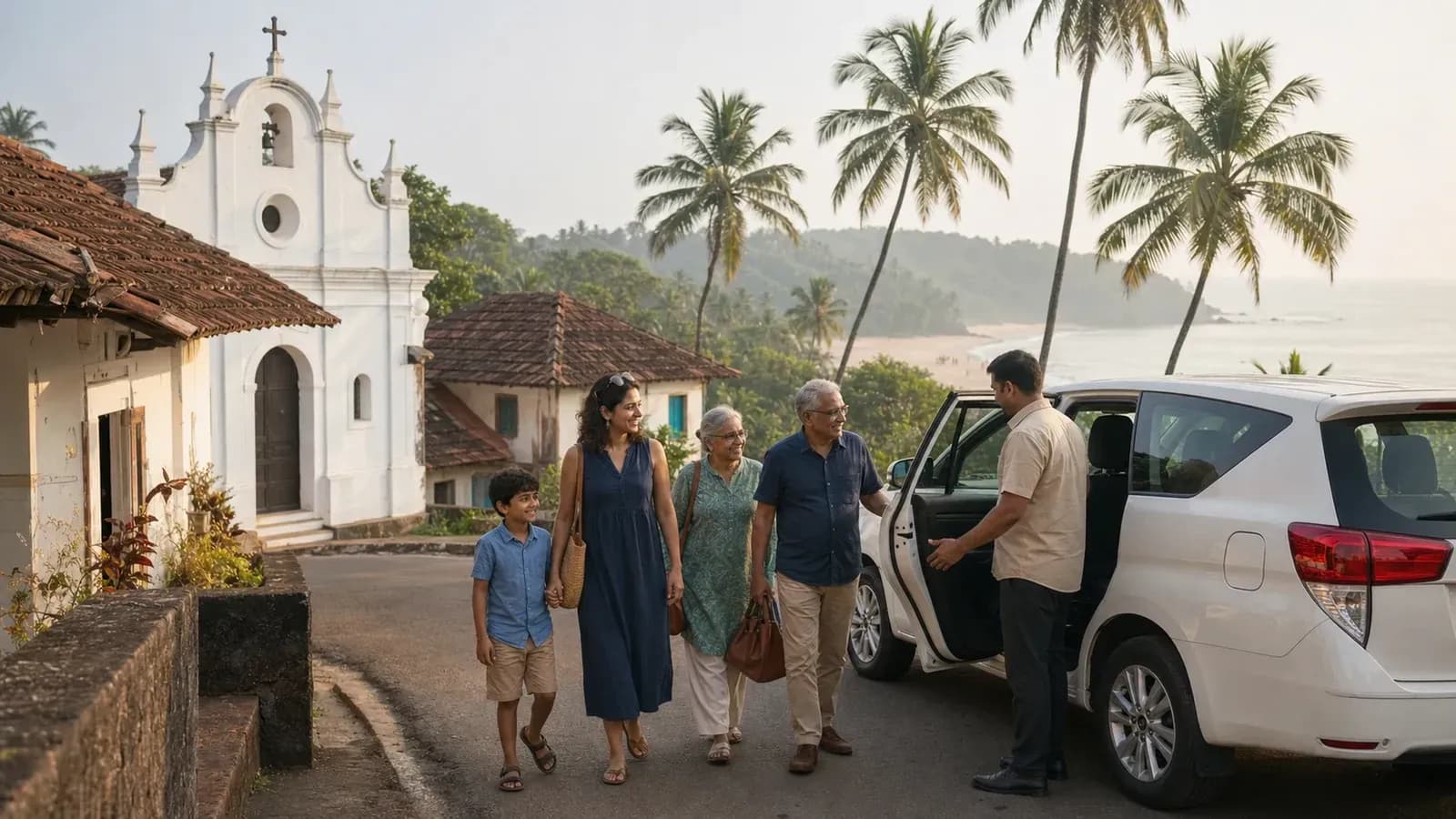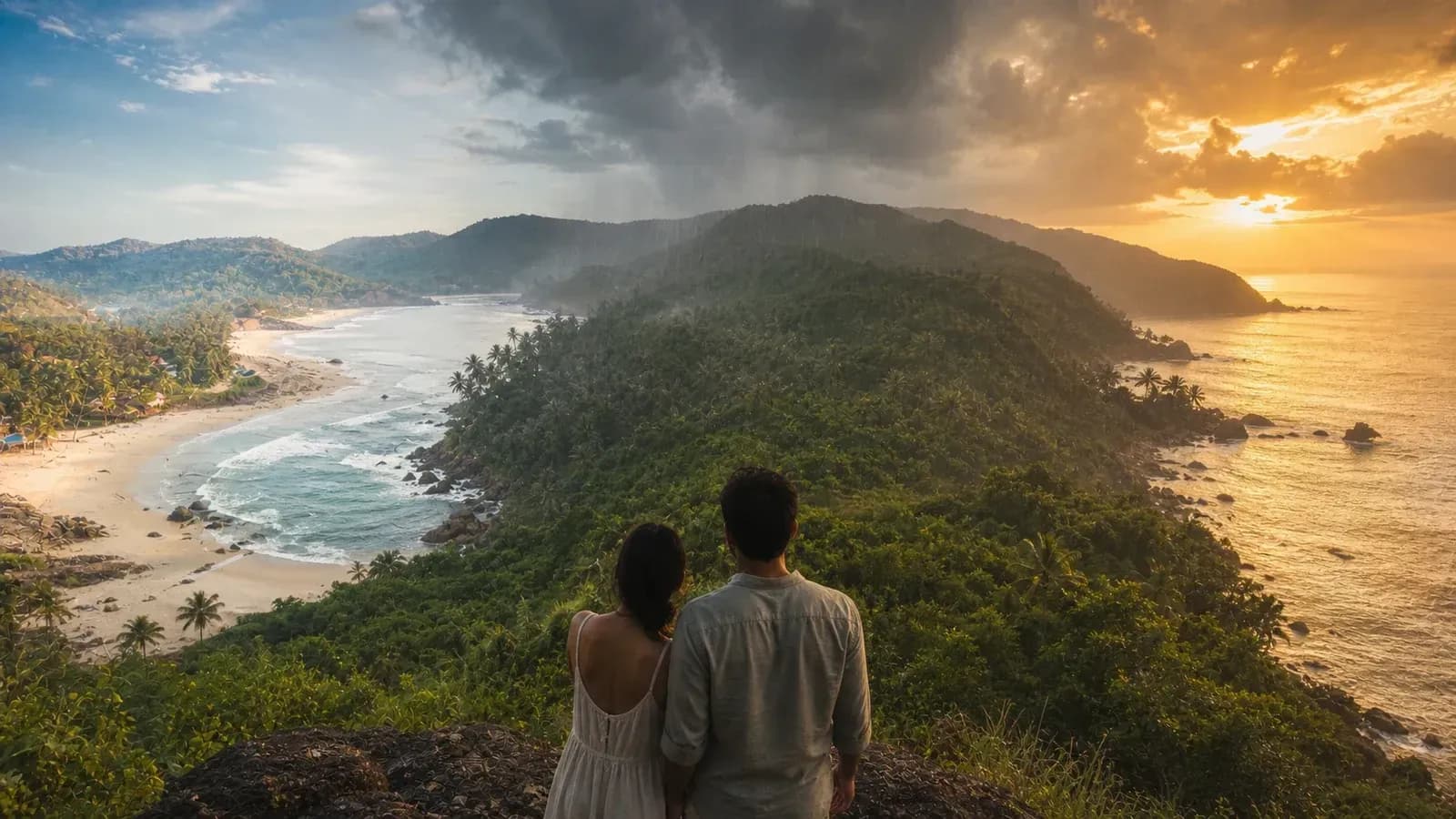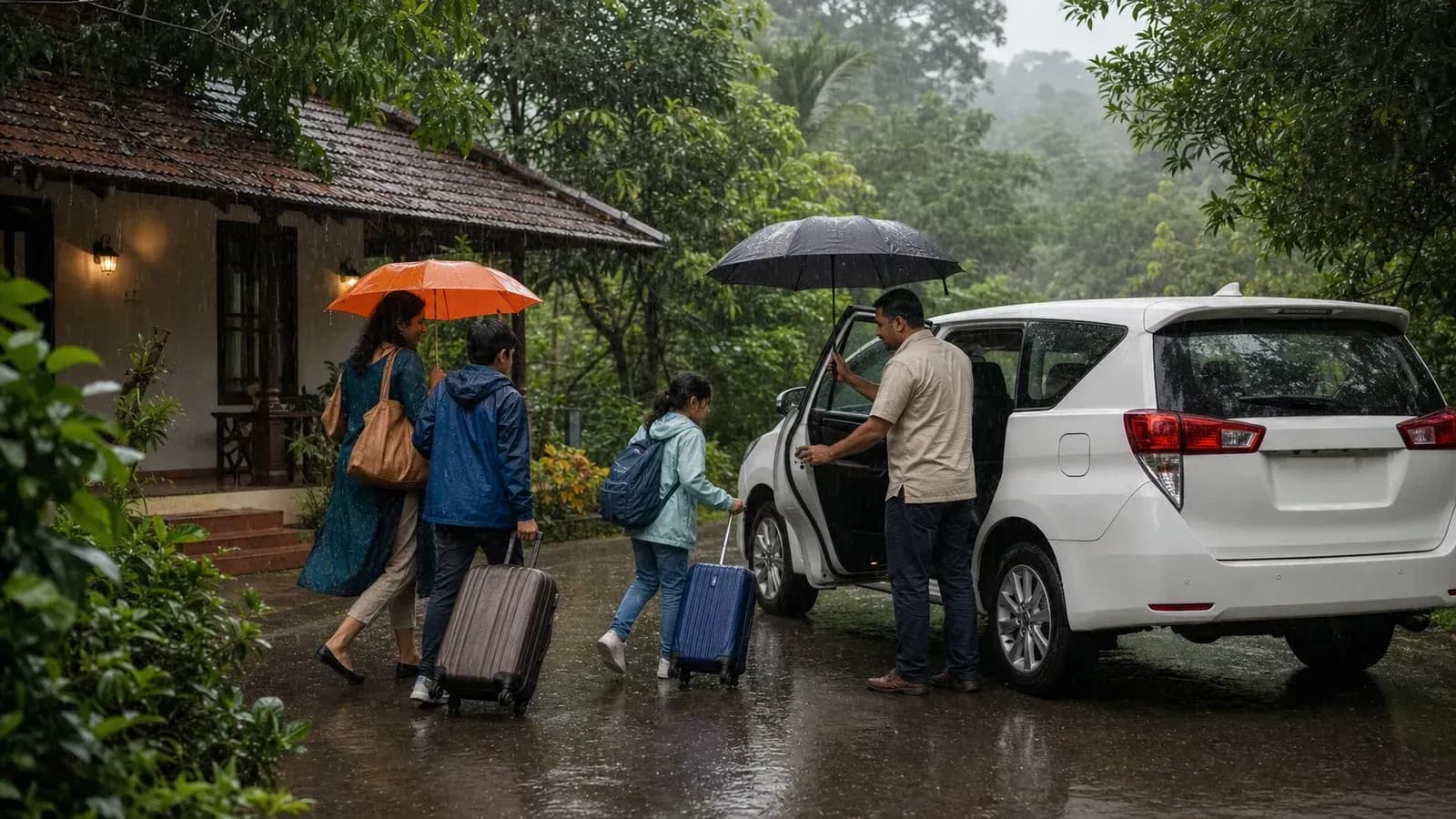
Goa in the monsoon is greener, quieter and slower. That can make for a lovely trip, but it also changes how a road day should be planned. A good monsoon itinerary leaves room for rain, road conditions and a change of plan without turning every delay into a problem.
Goa's main monsoon season runs from June to September. Rain can be brief in one place and heavy in another, so a fixed minute-by-minute schedule rarely works well. The practical approach is to choose fewer stops, share complete pickup details and check official weather and local advisories before a long drive.
Build time around the road, not only the map#
A map estimate is a starting point. Heavy rain can reduce visibility, slow traffic and cause waterlogging on low-lying roads. A route that feels simple in dry weather may take longer when rain arrives during school, office or airport traffic.
For airport and railway transfers, ask for a planned pickup time with a weather buffer. Share the flight or train number, exact terminal or station, hotel or villa pin, group size and luggage count. If the arrival is delayed, update the driver as soon as you know.
Choose the vehicle for people and luggage#
Do not choose a vehicle by passenger seats alone. Monsoon bags are rarely neat. Umbrellas, wet jackets, shoes, strollers and larger suitcases all use space. A car that technically seats the group may still feel cramped once the luggage is loaded.
Tell the transport team how many large and cabin bags you have, plus any stroller, wheelchair, sports gear or child seat requirement. For a family or group, one slightly larger vehicle can be more comfortable than squeezing people around luggage.
Plan a shorter sightseeing day#
Monsoon Goa rewards a slower route. Pick two or three important stops and treat the rest as optional. Combine an outdoor stop with an indoor or covered alternative, then keep a proper meal window instead of using every spare minute for another drive.
Start from the exact hotel or villa rather than a broad area such as North Goa or South Goa.
Choose stops that form one sensible loop and avoid crossing the same part of Goa repeatedly.
Keep the most weather-sensitive stop flexible.
Allow time to dry off, eat and return before the day becomes tiring.
Confirm the final route on the morning of travel if heavy rain is expected.
Treat waterfalls and water bodies with care#
A waterfall can look spectacular during the monsoon and still be unsafe or temporarily inaccessible. Water levels, currents, road access and local restrictions can change quickly. Do not assume a place is open because an old post or video shows it.
Check the same-day position with the relevant authority or a reliable local operator. Follow barriers and official instructions, and do not enter rivers, lakes, waterfalls or other water bodies when warnings are in place. A private vehicle makes access easier, but it does not make unsafe conditions safe.
Share the exact pickup point#
Some villas and small hotels sit behind narrow lanes, steep approaches or entrances that are difficult to identify in heavy rain. Send the exact map pin and property name before pickup. If the final lane is difficult for a larger vehicle, share the property contact so a practical meeting point can be agreed.
Keep one reachable phone number for the group. If several people are travelling, nominate one coordinator for changes. That prevents different passengers from sending conflicting pickup instructions.
Keep a small monsoon kit in the car#
A light rain layer or compact umbrella
A waterproof pouch for phones and documents
A small towel and a spare pair of socks
Drinking water and essential medication
A power bank and charging cable
A separate bag for wet clothes or footwear
Keep medicines, travel documents and one dry layer in the cabin rather than deep inside the luggage. If the trip includes children or older travellers, plan more frequent comfort stops.
Ask these questions before paying#
What is included in the fare?
Are tolls, parking and driver allowance included?
How are waiting time and overtime charged?
Is there a night pickup or drop charge?
What happens if an official warning or road closure affects the route?
Who should the group contact if the plan changes?
A clear quote should match the actual trip: route, date, pickup time, passengers, luggage and vehicle. If any of those details change, ask whether the fare or vehicle needs to change too.
Check official information on the day#
Before a long road day, check the Met Centre Goa forecast and Government of Goa advisories. Local conditions can differ across the state. If an official warning asks people to avoid travel or a specific area, change the plan. Goa Tourism's multilingual helpline 1364 can also help visitors with tourism-related information.
How Goa Beyond can help#
Send us the route, date, pickup time, exact stay, group size and luggage count. We will help you work out a suitable vehicle and a realistic road plan for the day. If the weather changes, the aim is simple: keep the communication clear and adjust the trip without unnecessary confusion.